Table Of Content

The darkness of the trees and shadows on the tractor emphasize a dark and mysterious atmosphere. For instance, if the flowers were faded and turning brown and the robot was dull and rusted. But instead, the bright colors help paint a scene that is innocent and welcoming. Color provides the most psychological aspect of design, as it's how most humans see reality.
How to Inspect an Element in Every Browser And 7 Pro Tips
Rotational symmetry (or radial symmetry) occurs when everything rotates around a common center. It can occur at any angle or frequency, as long as there’s a common center. Natural forms that grow or move perpendicular to the earth’s surface develop rotational symmetry. Rotation without reflection can be used to show motion, speed or dynamic action.
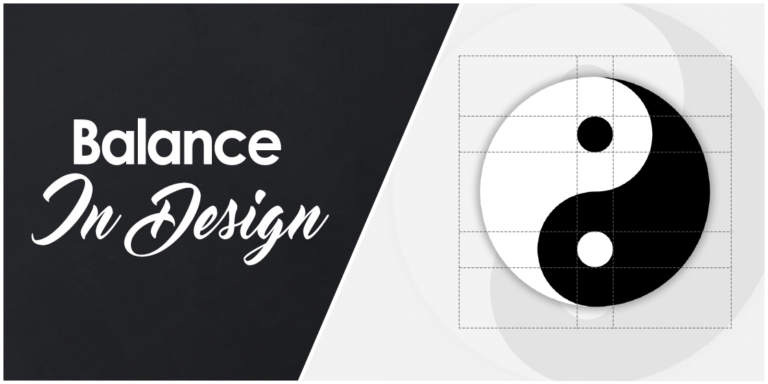
Practical Tips to Achieve Balance in Design
From balance and contrast to rhythm and unity, each principle plays a pivotal role in enhancing the clarity, appeal, and functionality of designs. By mastering these principles, designers can create works that not only catch the eye but also sustain interest and communicate messages powerfully. Emphasis is a vital principle of design that focuses attention on the most important elements of a composition. It acts as a point of attraction that pulls the viewer’s eye to key areas, ensuring they are noticed immediately. Designers can create emphasis through contrast, color, size, and placement. For instance, a brightly colored object against a subdued background naturally draws the eye, just as a larger element dominates smaller ones.
Trending Guides
Even though this image has a lot of variety, it has an overall harmonious aspect, creating a sense of unity. Proportion refers to the relative size and scale of elements in the design. It's essential for making things look three-dimensional and also adds direction and hierarchy. Balance in design doesn’t mean giving elements equal weight — it’s not about balancing the scales! Rather, this principle refers to a unified or harmonious distribution of elements in a design.
Trending Articles
Rhythm is how multiple design elements that are different from each other repeat in a particular order. Besides text and color, emphasis is achieved with size, shape, weight, texture, and position, to name a few. Even though each side has a different visual weight, the overall design maintains an equal visual weight on both sides.
They might create a contrasting symmetry, or they might use different shapes to create an asymmetry that helps focus the gaze onto the main part of the design. In symmetrical design, centering the design elements is a great way to ensure that the design you will end up creating will be symmetrical. Finally, radial balance can be extremely fun to experiment with in design projects. Rather than balancing objects across a central line in the composition, objects balance according to a single point in the center of the design. While it can be tempting to balance the composition by placing the different objects equidistant from the center, you can also balance them in other ways. Back to our see-saw analogy, physics tells us that a heavier object closer to the center of the see-saw can be balanced by a lighter object at a distance.
Principles of Design: Creating Balance
We help your brand get the visual Identity to stand out in a competitive marketplace. The photograph below, is a great example of something being completely off-balance, and yet still appealing to the eye. So going off-balance is a choice you’ll want to tread cautiously with. And only if you are sure about the effect it will create on your audience.

Symmetrical balance occurs when equal weights are on equal sides of a composition, balanced around a fulcrum or axis in the center. Symmetrical balance evokes feelings of formality (it’s sometimes called formal balance) and elegance. A wedding invitation is a good example of a composition that you’d likely want to be symmetrically balanced. Asymmetrical balance is when elements aren’t weighted equally. This adds visual interest and is ideal for more modern or informal designs.
Proportion
This includes understanding patterns, symmetry, and closure, which guide how viewers interpret visual components as a collective group. Some of them contradict each other, while others complement each other. As a designer, remember that there is always an opportunity to do something brilliant and significant by breaking some odd rules here and there. If you enforce unity across your creatives, your designs will begin to look dull and need more dynamism. Create refreshing pops in the sea of brand guidelines and color guides.
There was a time when perfectly symmetrical designs in architecture were lauded but now you might see several oddly shaped architectural wonders. Even without symmetry, you can make an impact provided you maintain balance. You can play around by altering the position and count of the virtual axes and obtain the following types of symmetry. Perfection sometimes makes your design get lost in the crowd.
There is no mirrored image, and both sides look different, but the design is still stable. For example, this could be that an element on one side is much 'heavier' than the rest and is overpowering, thus making the design look unstable. Now that you know the rules, you can learn how and when to break them. There are times when you want to make your design uncomfortable to your viewers.
So, there is no strain on the eye nor a rigid focus created. ” Well, this type of balance is the perfect example of how something that is seemingly disorganized can actually be balanced. This is achieved by spreading out elements of equal visual weights but in a purposefully chaotic layout. In designs that incorporate radial balance designers will create a center point to draw attention there. Critical information or calls to action often occupy this central spot where the human eyes are naturally drawn.
Creativity is subjective, which is why everyone interprets your design differently. What matters is how you can get the most considerable sum of people to interpret your design the way you want. In fact, even the ancient Egyptians religiously integrated symmetry into their art. A small dark shape can balance a lighter toned large shape.
Designs with poor contrast have elements that can be easily missed. For any design to have a dynamic look, it is essential to have well-contrasted elements. Asymmetrical balance might be difficult to comprehend but the impact it has on the onlooker makes it totally worth exploring. Wondering how to explore such creative design concepts for your ads and other graphic designs? Notice how the mass of the dark horse is broken by the fine light lines of strapping and the white horse is similarly punctuated by fine dark lines.
Proximity refers to grouping elements together to emphasize their relationship. A clever use of the distance between design elements can add meaning to your design. Sometimes referred to as dominance, emphasis helps draw the eye to key elements in a design. That could be imagery, charts and graphs, headings or other important bits. Framing directs focus and emphasizes specific aspects of the design, acting like a visual spotlight that draws attention to key elements.
Emphasis is also used to create a visual hierarchy in design. This is where certain elements guide the viewer's eye through a planned sequence of elements. Emphasis is where you use elements to make things stand out. Color, value, and texture are just a few ways to achieve this, but also principles such as contrast movement and proportion. Lines are the most essential elements in design, forming a distinct mark between two points.